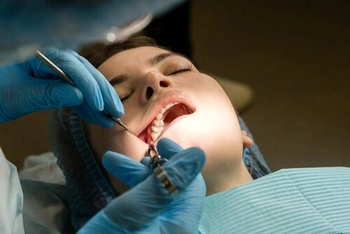
dental implants are one of the most effective solutions for replacing missing teeth – offering strength, stability, and a natural feel.
But if you’re considering this treatment, one of the most common questions you might ask is: “Are dental implants painful?”
At Advanced Dental Care Mosman, our expert team helps you understand the basics of dental procedures and dental health. In this blog, we are breaking down what you can realistically expect before, during, and after the procedure, and how to make your recovery as comfortable as possible.
1. Pain During the Procedure – What to Expect
Let’s start with the big worry: Does it hurt? The good news is that you shouldn’t feel pain during the implant procedure itself. At ADCM, we use local anaesthesia (and sedation options if needed) to numb the area completely before any work begins. Most patients report feeling pressure or movement, but no sharp pain or discomfort during the surgery.
This means the surgical placement of the implant inserting a titanium post into the jawbone is done without pain. For many patients, this part goes smoother than they expected.
2. What Happens Once the Anaesthesia Wears Off?
Once the anaesthetic fades, typically a few hours after surgery, you’ll start to feel sensations around the treated area. It’s normal to experience:
✓ Mild to moderate soreness
✓ Tenderness and swelling
✓ Bruising on gums or cheek
✓ Jaw stiffness or sensitivity
This discomfort is part of your body’s natural healing response. It’s similar to what you might feel after a tooth extraction: not unbearable, but noticeable.
How long does this last?
Most patients find that:
✓ Pain peaks in the first 24 to 48 hours.
✓ Discomfort normally decreases significantly by day 3 to 5.
✓ Mild sensitivity can stay for up to one or two weeks, particularly if multiple implants were placed.
It’s important to remember that everyone’s healing timeline is slightly different and depends on factors like your overall health, bone density, and whether additional procedures (like bone grafting) were required.
Please consider contacting us for more information.
3. Tips to Manage Pain and Discomfort
Recovery doesn’t have to be uncomfortable. Here’s how many patients minimise pain during the first few days:
Follow Your Dentist’s Medication Guidelines!

Our dentists may recommend:
✓ Over-the-counter pain relief like ibuprofen or paracetamol
✓ Prescription medications if needed. Taking medication before the anaesthetic fully wears off (often within ~2 hours post-surgery) can help reduce peak pain levels.
📖 People also read about:
Be sure to consult with us about what’s best for your case.
Ice Packs for the First 48 Hours
Apply an ice pack on the outside of your cheek for 15 to 20 minutes at a time to reduce swelling. This can help reduce discomfort and inflammation.
Stick to Soft Foods
For the first few days:
✓ Eat soft, cool foods (like yoghurt, smoothies, mashed potatoes)
✓ Avoid hard, crunchy, spicy or hot foods. This prevents irritation to the implant site and makes eating more comfortable.
Rest & Relax
Avoid vigorous exercise and heavy lifting for the first few days. Your body heals best when you’re relaxed and taking it easy.
4. Healing Timeline: From Day 1 to Months Later
Understanding the healing process can ease anxiety and help you know what to expect:
First Few Days
✓ Discomfort peaks around 24 to 48 hours
✓ Swelling and tenderness are normal. Most people can return to light daily activities within a couple of days if they feel up to it.
First Week
✓ Pain and swelling should be significantly reduced
✓ You may still feel mild sensitivity, especially while chewing. By around day five to seven, most patients feel noticeably better.
2 to 6 Weeks
During this period, the soft tissue continues to heal. You might still notice occasional sensitivity if you accidentally bite the area or brush a little hard.
📖 People also read about:
3 to 6 Months: Osseointegration
This is the crucial long-term healing phase where the dental implant fuses with your jawbone (a process called osseointegration). This internal healing doesn’t usually cause noticeable pain, but it’s essential for long-lasting implant success.
Your dentist will monitor this over a series of follow-ups to ensure everything is progressing well.
5. Aftercare – The Key to Smooth Recovery
Good aftercare helps minimise discomfort and supports long-term success.
Gentle Oral Hygiene
Clean your mouth as instructed:
✓ Avoid brushing the surgical site directly for a few days
✓ Use a prescribed or recommended mouthwash or salt-water rinse. This keeps the area clean without irritation.
Avoid Smoking and Alcohol
Smoking and alcohol can greatly slow healing and increase the risk of complications. Avoid both during recovery.
💡 Need help?
We offer professional book a consultation to help you achieve your goals.
Attend Follow-Up Appointments
You’ll have several check-ups to assess healing, remove stitches if needed, and plan future steps like abutment/crown placement.
6. When Pain Might Be a Concern
Some discomfort is normal, but you should contact us if you experience:
✓ Increasing or severe pain after a few days
✓ Signs of infection (pus, fever, persistent swelling)
✓ Excessive bleeding
✓ A loose-feeling implant
These may require a professional review to ensure everything is healing properly.
What Patients Often Say
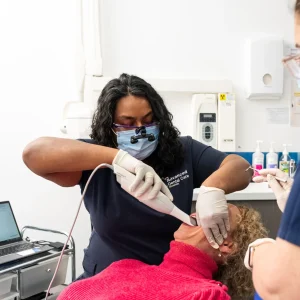
Many people are surprised at how manageable implant recovery can be. While the idea of surgery can sound intimidating, most patients report that the reality, with anaesthesia, during surgery and mild soreness afterward, is far more comfortable than they expected. The sense of certainty, dental function, and confidence a successful implant provides is life-changing.
At ADCM, we tailor every treatment plan to your needs and comfort. We offer detailed consultations, personalised aftercare instructions, and help on each step of the way, making sure your journey to a restored smile is as smooth and pain-free as possible.
Ready to Make Life More Comfortable?
If you’re considering dental implants and still have questions, book a consultation with us at Advanced Dental Care Mosman. Our expert team is here to explain what’s involved and how we keep you comfortable, before, during, and after your treatment.
FAQs
Are dental implants more painful than tooth extractions?
In most cases, dental implants are no more painful than a standard tooth extraction. The procedure is performed under local anaesthesia, so you won’t feel pain during surgery. Any post-treatment discomfort is usually mild to moderate and can be managed with prescribed or over-the-counter pain relief.
How long does pain last after dental implant surgery?
Most patients experience the most discomfort within the first 24 to 48 hours. Pain and swelling typically reduce significantly within 3 to 5 days, with mild tenderness possibly lasting up to one or two weeks, depending on individual healing and the complexity of the procedure.
What can I do to make dental implant recovery more comfortable?
Following your dentist’s aftercare instructions is key. This includes taking pain relief as recommended, using ice packs to reduce swelling, eating soft foods, maintaining gentle oral hygiene, and attending follow-up appointments. Avoiding smoking and alcohol also helps promote faster healing.