No, a dental implant can’t get a cavity. The post is titanium and the crown is ceramic, so there is no enamel for decay to eat into. That doesn’t make an implant maintenance-free. The gum and bone holding it in place are still living tissue, and they can run into trouble if they’re neglected.
It’s a fair question to ask before or after implant treatment, and the full answer has two parts. As a Mosman dental clinic that places and restores implants in-house, we think patients should hear both.
Key takeaways
- An implant can’t decay, because it has no natural tooth structure.
- The gum and bone around an implant can still become inflamed or infected.
- Natural teeth next to an implant can still get cavities.
- Problems around an implant are much easier to treat when they’re caught early.
Why a Dental Implant Can’t Get a Cavity
A cavity forms when bacteria in plaque feed on sugars and produce acid. That acid dissolves the minerals in enamel and the softer dentine underneath, and over time a hole forms.
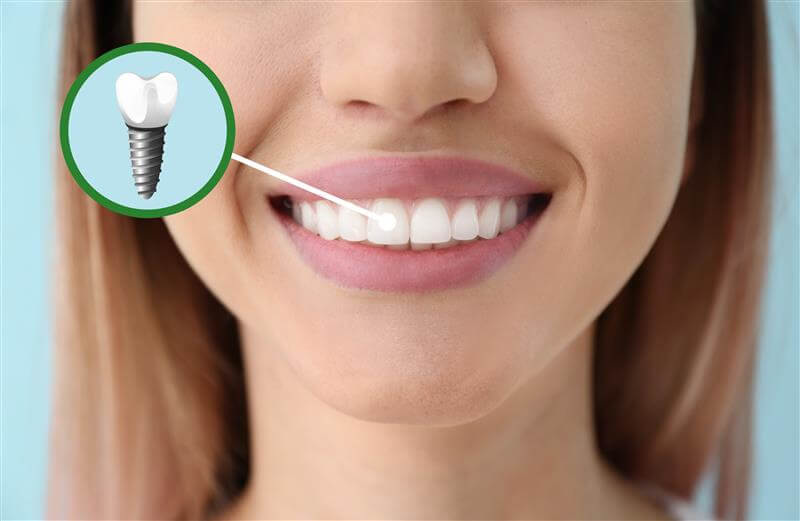
A dental implant has none of that tooth structure. It is made of three parts:
- The implant post, a titanium screw that sits in the jawbone and acts as the tooth root
- The abutment, a small connector that joins the post to the crown
- The crown, the visible tooth, usually made from porcelain or zirconia
Acid from plaque can’t dissolve titanium or ceramic, so the implant itself will never need a filling. The catch is that plaque still collects on an implant crown exactly as it does on a natural tooth. It simply does its damage somewhere else.
So, Can Dental Implants Go Wrong?
Yes, they can. Many problems are preventable, and most are treatable when they’re picked up early. These are the four worth knowing about.
Infection around the implant
This is the main long-term risk. Plaque left around the gumline can inflame the gum next to the implant, a condition called peri-implant mucositis. At this stage it can usually be reversed with a professional clean and better home care.
Left alone, the inflammation can spread to the bone that holds the implant. This is peri-implantitis, and it works much like gum disease around a natural tooth. As bone is lost, the implant loses support and can eventually loosen.
The implant doesn’t bond with the bone
After placement, the jawbone needs a few months to grow onto the implant surface. Occasionally that bond doesn’t form properly, and the implant stays tender or feels loose. Careful planning lowers this risk, which is why Dr Priya Shanmugalingam uses 3D imaging to assess your jawbone before any implant is placed.
Wear and damage to the crown
The crown can chip, and the small screw holding it in place can work loose, especially in people who clench or grind. These are mechanical problems, not biological ones, and they can usually be repaired without disturbing the implant itself.
Decay in the teeth next door
Your implant can’t decay, but the natural teeth beside it can. Plaque that builds up around an implant crown also sits against its neighbours, so a cavity can start on the tooth right next to it.
Warning Signs to Watch For
A healthy, healed implant should feel like any other tooth. Book a check if you notice any of these:
- Bleeding when you brush or floss around the implant
- Red, swollen or tender gum beside it
- A bad taste, or pus near the gumline
- Gum pulling back so the metal starts to show
- Pain or pressure when you bite
- Any movement in the crown or the implant
A wobbly implant doesn’t always mean the implant has failed. Sometimes it’s only the crown or its screw that has come loose, which is a much simpler fix. Either way, it needs to be looked at promptly.
Who Has a Higher Risk of Implant Problems?
Some factors make complications more likely:
- Smoking, which slows healing and reduces blood flow to the gums
- A history of gum disease
- Poorly controlled diabetes, which affects how well you heal
- Clenching or grinding your teeth
- Skipping check-ups and cleans
None of these automatically rules you out. They do mean your dentist needs to know about them, so your treatment and maintenance plan can be adjusted to suit.
How to Look After Your Implant
Looking after an implant is much the same as looking after natural teeth, with a little extra attention at the gumline.
- Brush twice a day with a soft-bristled brush, angling it towards the gum around the implant.
- Clean between your teeth daily with floss, interdental brushes or a water flosser.
- Keep up your check-ups and professional cleans so the gum and bone around the implant can be monitored.
- Wear a night guard if you grind or clench.
- Stop smoking, or cut down as much as you can.
Good aftercare starts before the implant goes in. With more than 20 years in implant dentistry, Dr Priya plans every case of dental implants in Mosman around the health of your gums and bone first, because that foundation decides how well an implant holds up. She is a Fellow of the International Congress of Oral Implantologists and a member of the Australian Society of Implant Dentistry. Every stage, from the first consultation to the final crown, is completed at our Mosman practice, so the team reviewing your implant is the same team that placed it.
Worried About Your Implant? Talk to Our Mosman Team
A dental implant can’t get a cavity, but it still relies on healthy gums, healthy bone and regular care. If something feels different, don’t wait for it to settle on its own. Early problems are far simpler to treat than advanced ones.
Whether you already have an implant or you’re still deciding if one is right for you, we’re happy to talk it through. Call Advanced Dental Care Mosman on (02) 9969 3982 or contact us to book a consultation with Dr Priya.