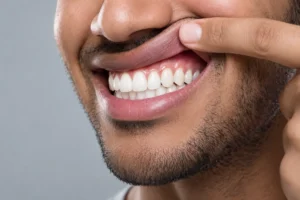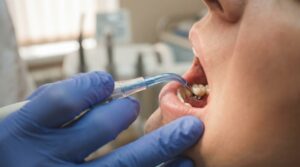
You have a gap, or a tooth that cannot be saved, and an implant is on the table. Before you commit, a fair question comes up: will fixing this one tooth cause trouble somewhere else?
So, can dental implants affect other teeth, your general health or your sinuses? A well-planned implant should leave all three alone, and it often protects the teeth around it. When problems do happen, nearly all of them trace back to planning, placement or cleaning, not to the implant itself.
At our Mosman dental clinic, these are the three questions patients from across the Lower North Shore ask most before saying yes.
Key takeaways
- An implant stands on its own, so the teeth beside it are not drilled or used as anchors.
- Your health affects the implant far more than the implant affects your health.
- Only upper back implants sit near the sinuses, and 3D imaging shows the bone available before anything is placed.
Can Dental Implants Affect Other Teeth?
An implant is self-supporting. Unlike a bridge, it does not need the teeth on either side trimmed down to hold it in place, so healthy enamel stays untouched.
Leaving the gap is usually harder on your other teeth than filling it. Neighbouring teeth tend to tilt into the space, the opposing tooth can drift out of line, and the rest of your bite picks up the extra load. An implant holds the space and shares the work.
There are still three ways an implant can bother the teeth around it, and each one is avoidable:
- Position. An implant placed too close to a neighbouring root can damage it. This is why the angle and depth are planned on a 3D scan first.
- Food traps. An implant is fixed in bone and never moves. Natural teeth shift slightly over the years, so a small gap can open beside the implant crown and catch food. If floss starts shredding or food keeps packing into one spot, tell us. It is usually a simple fix.
- Bite pressure. Natural teeth have a tiny cushion around the root. Implants do not. A crown that sits a fraction high can overload the tooth it bites against, so we check the bite at fitting and again at later visits.
Gum health matters here too. Plaque left around an implant can inflame the gum and bone, and that bone is shared with the tooth next door.

Can Dental Implants Affect Your Health?
For most people, no. Implants are made from titanium, a material used inside the body for decades in joint replacements, and bone bonds to it directly. True titanium allergy exists but is rare. If you have a history of metal sensitivity, mention it at your consultation.
If you have read alarming claims online, our article on whether dental implants can cause brain damage walks through where they come from.
The more useful way to look at it is in reverse: your health affects the implant. Before recommending dental implants in Mosman, we ask about:
- Diabetes, and how well it is controlled
- Smoking or vaping
- Medications that affect bone, including some osteoporosis treatments
- A history of gum disease
- Clenching or grinding
None of these automatically rules you out. They change the plan, the healing time or the aftercare. Implants that struggle are rarely a surprise, as the warning signs are usually there at the start.
The one health risk to take seriously is a long-running infection around an implant. It tends to be painless early on, so bleeding when you brush around an implant is a reason to book, not something to wait on.

Can Dental Implants Affect Your Sinuses?
Only in one part of the mouth. Your sinuses sit above the upper back teeth. Implants in the lower jaw are nowhere near them, and upper front teeth sit well forward of them.
Something that surprises many patients: once an upper back tooth is lost, the bone under the sinus slowly thins. The longer the gap has been there, the less bone there may be to hold an implant. An implant placed without enough bone can sit into the sinus and cause irritation or infection.
This is a planning problem, and it is solved before surgery. A 3D scan shows how much bone sits between your mouth and the sinus floor. Where it is thin, the usual options are building the bone up with a graft first, or changing the length or angle of the implant so it stays in solid bone.
Surgery should never be the moment anyone finds out how much bone you have.
After an upper implant, contact your dentist if you notice:
- A blocked nose or pressure on one side only that does not clear
- A bad taste or discharge that will not go away
- Fluid passing into your nose when you drink
- Pain under the cheekbone that gets worse instead of better
What Good Implant Planning Looks Like
Every concern above comes back to planning. A careful assessment should include:
- A full check of your gums and remaining teeth, not only the gap
- 3D imaging to map bone, roots, nerves and sinuses
- A frank conversation about your medical history and habits
- A bite check when the crown is fitted
- A cleaning routine and review schedule you can stick to
Dr Priya Shanmugalingam has more than 20 years of experience and is a Fellow of the International Congress of Oral Implantologists. Every stage, from the scan to the final crown, is done here in Mosman. If an implant is not the right option for you, we will say so and talk through the alternatives.
Worried About How an Implant Could Affect the Rest of Your Mouth?
Bring your questions to a consultation. We will look at your teeth, gums and bone, explain what we see in plain language and give you an honest answer about whether an implant suits you. We can also check what your health fund covers. Contact Advanced Dental Care Mosman or call (02) 9969 3982 to book.
General information only. Any surgical or invasive procedure carries risks, and an individual assessment is needed before treatment.