You have peeled the strip off, your teeth feel slightly slippery, and lunch is sitting on the bench going cold. The short version is that you can eat after whitening strips, just not immediately. Waiting roughly 30 to 60 minutes, then being a little selective for the rest of the day, makes a real difference to how even and how long lasting the result ends up looking.
The Short Answer: Give It 30 to 60 Minutes
For most at-home strips, half an hour is the minimum and a full hour is better. During that window, plain water is the only thing we would recommend putting in your mouth.
If you can stretch it to two hours before anything strongly coloured, you will get a better result again. That is not a rule you need to obsess over, but the first couple of hours are when your teeth are least able to defend themselves.
Why the Wait Actually Matters
Whitening strips work because peroxide moves through the surface of your enamel and breaks apart the pigment molecules sitting inside it. That process is not gentle housekeeping. While it happens, your teeth temporarily lose some moisture and the enamel surface becomes more absorbent than usual.
The problem is that absorbency does not discriminate. Enamel that has just released old coffee stains will take on fresh pigment just as readily. Saliva rehydrates and remineralises the surface over the following hours, and that is what you are waiting for.
There is a second reason too. A thin film of gel stays on the teeth for a short time after the strip comes off and continues to do a small amount of work. Eating or drinking early rinses it away before it has finished.
📖 People also read about:
In our experience at the clinic, patients who come in frustrated by patchy at-home results have rarely done anything wrong with the strips themselves. They have usually had a flat white or a bowl of bolognese too soon afterwards, most days of the course.
What You Can Safely Eat Once the Hour Is Up
Think pale, mild and roughly room temperature.
Good choices include plain chicken or white fish, rice, pasta with olive oil, potato, cauliflower, banana, plain yoghurt, white cheese, egg and plain bread. Water throughout is genuinely helpful, not just filler advice.
Leave these for later in the day:
- Strong colours: coffee, black tea, red wine, cola, soy sauce, barbecue sauce, tomato-based sauces, curry, beetroot, berries and dark chocolate.
- Acids: citrus, vinegar-based dressings, soft drinks, sparkling water and flavoured water. Acid is worth avoiding even when the drink is clear, because freshly whitened enamel is more prone to sensitivity.
- Temperature extremes: very hot soup or iced drinks can trigger a sharp response that would not normally bother you.
A useful shortcut: if it would stain a white shirt, it will stain your teeth right now.
📖 People also read about:
The First 24 to 48 Hours Are the Part People Skip
Enamel does not snap back to normal the moment the timer hits 60 minutes. Porosity settles gradually across the following day or two, so the risk tapers rather than switching off.
Keeping pigment low for a full 24 hours, and closer to 48 if you are partway through a multi-day course, protects the shade you have paid for. A few practical habits help. Use a straw for anything dark, rinse with water after meals, and hold off brushing for about 30 minutes after removing a strip so you are not scrubbing softened enamel with a whitening toothpaste.

Where Strips Sit Alongside Professional Whitening
At-home strips have a real place. They are convenient, affordable and fine for mild surface staining. They also have limits worth knowing before you start a third box.
💡 Need help?
We offer professional teeth whitening mosman to help you achieve your goals.
Retail strips are lower in strength than what a dentist is permitted to supply, and many sold online here are packaged for overseas markets, so the instructions may not match what is actually available in Australia. A one-size strip also struggles to sit evenly on crowded or rotated teeth, which is a common cause of patchy results and gum irritation. If your teeth have not shifted after a couple of full courses, that usually points to something the strips cannot reach, and this is where professional teeth whitening in Mosman gives us a proper look at the cause before anything else happens. Deeper discolouration from trauma, certain medications or ageing dentine responds differently, and no amount of surface bleaching will lighten a crown, veneer or composite filling.
When Sensitivity Is Worth a Phone Call
Short, sharp sensations for a day or two after whitening are common and settle on their own. Some patterns are not routine and are worth checking:
- Sensitivity that keeps going beyond three or four days
- White or sore patches on the gum line, which usually means gel has been sitting on soft tissue
- One tooth aching noticeably more than the rest
- A single tooth that stays darker while everything else lightens
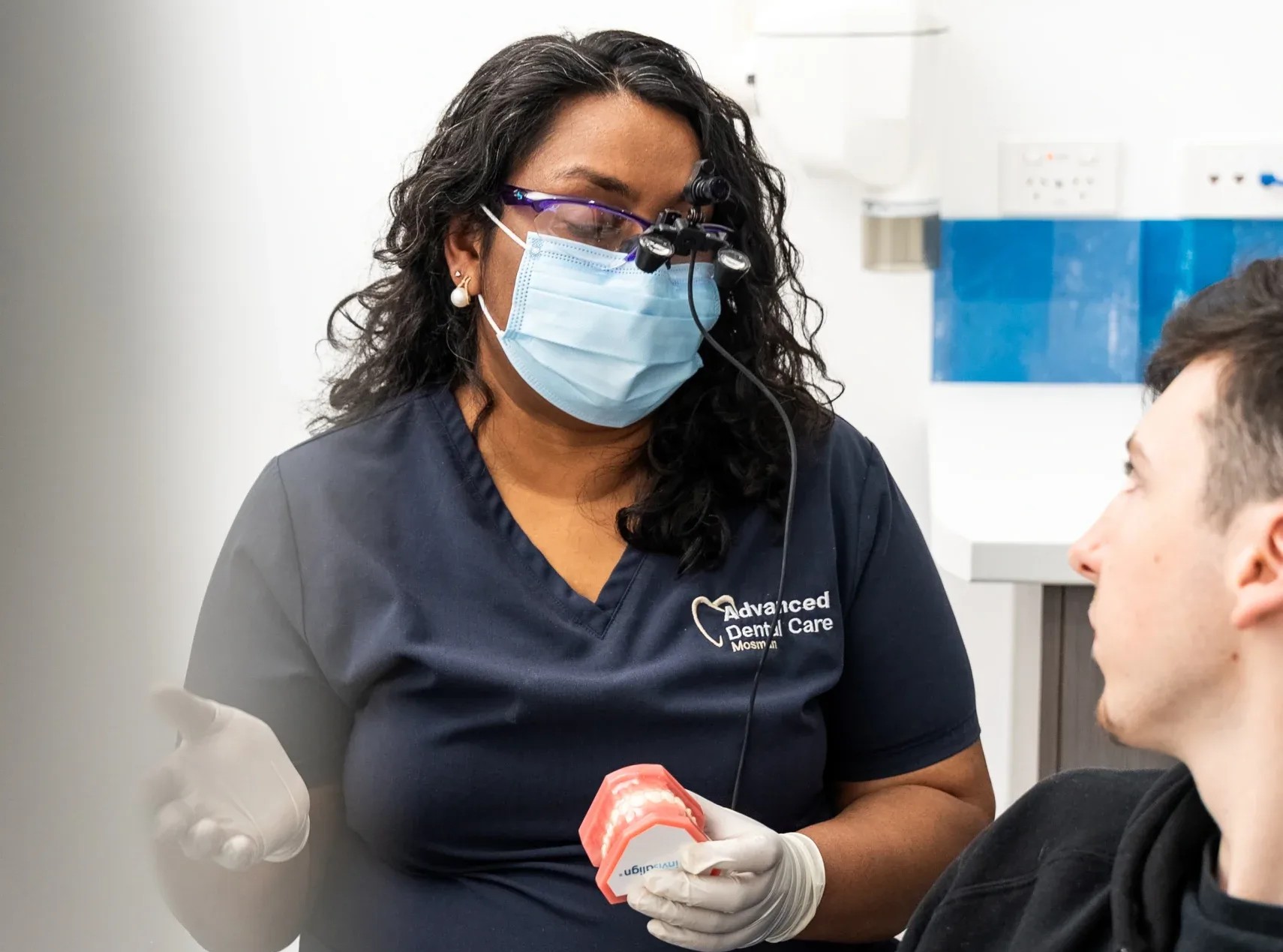
That last one matters. A tooth that darkens on its own often has an internal issue, and whitening the outside will not correct it. Dr Priya sees this regularly during smile makeover consultations, and it is far easier to plan around once identified.
Ready to Get a More Predictable Result?
If you are tired of guessing whether your strips are working, a short consultation will tell you what is actually causing your staining and which approach suits your teeth. Advanced Dental Care Mosman offers supervised in-chair whitening and custom-fitted take-home trays, both planned around your enamel and your sensitivity level.
Get in touch with our Mosman team or call (02) 9969 3982 to book a 30-minute Smile Makeover Consultation.